

Adding a spa to an existing swimming pool is an effective way to improve your backyard, create a relaxing retreat, and make your outdoor living space more functional. Whether you prefer an attached spillover spa, a separate in-ground spa, or a freestanding hot tub, several options are available depending on your pool’s structure, available space, and budget.
A well-planned pool and spa renovation can upgrade an older swimming pool without requiring a complete rebuild. However, spa installation involves more than selecting a design. Homeowners must consider structural integrity, plumbing, heating, electrical requirements, equipment compatibility, and ongoing maintenance before beginning construction.
Can You Add a Spa to an Existing Pool?
Yes, you can add a spa to an existing swimming pool, although the installation method depends on the pool’s construction and existing equipment. Some projects involve building an attached spa along the pool’s edge, while others use an independent in-ground spa or a standalone hot tub positioned nearby.
The process may require excavation, plumbing modifications, electrical work, new pumps, heating equipment, and changes to the surrounding deck. An attached spa can involve additional structural work if the contractor needs to modify the existing concrete or gunite pool shell.
Before choosing a design, have a qualified pool contractor assess your property and recommend a suitable approach. This evaluation helps identify potential construction challenges and determine whether your current pool and spa equipment can support the proposed installation.
What Are the Options for Adding a Spa to an Existing Pool?
There are three common options for creating a pool and spa combination. Each offers different benefits in terms of appearance, construction requirements, and equipment needs.
1. Attached Spillover Spa
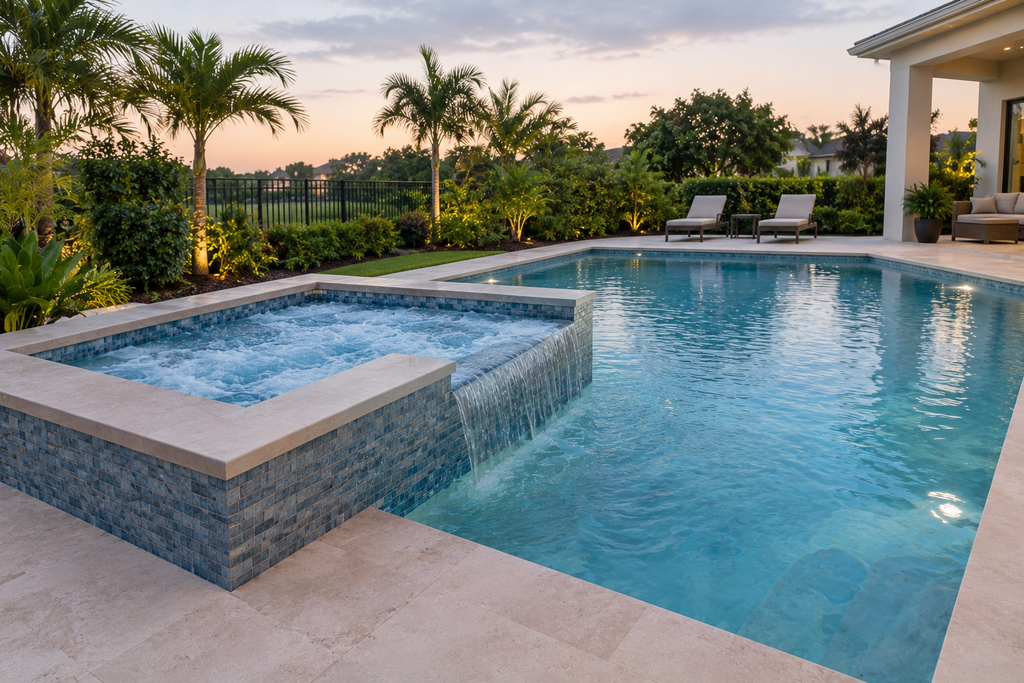
An attached in-ground spa is built beside or integrated into the existing swimming pool. It may feature a spillover edge that allows water to flow from the spa into the pool, creating a connected appearance.
This option is popular with homeowners seeking a custom pool and spa design. Features can include built-in seating, spa jets, decorative tile, spa lighting, and water features that complement the existing pool.
However, connecting a new spa to an existing pool may require structural engineering, reinforcement, plumbing modifications, and new interior finishes. Shared filtration or heating arrangements may be possible, but the design may also require dedicated jet pumps, valves, and controls.
Estimated cost: Approximately 30,000–60,000 or more, depending on the pool structure, design, equipment, and construction requirements.
2. Separate Inground Spa
A separate inground spa is constructed near the existing pool but operates independently. It can be designed to match the pool’s finishes while using its own plumbing, filtration, heating, and circulation equipment.
This option offers greater flexibility in placement and may reduce the need to modify the existing pool shell. It is particularly worth considering when homeowners want a custom spa without directly connecting it to the swimming pool.
Depending on the project, spa construction may involve excavation, a suitable structural base, plumbing, electrical connections, and finishing materials.
Estimated cost: Approximately 8,000–25,000, although custom designs and additional site work can increase the total.
3. Freestanding Above-Ground Hot Tub
A freestanding hot tub is installed near the swimming pool on a suitable concrete pad or appropriately designed deck. It is often a practical alternative for homeowners who want warm-water relaxation without major pool remodeling.
Most standalone units have their own filtration and heating systems. Installation requirements vary by model and may include electrical work, foundation preparation, and access planning for delivery and future servicing.
Although a freestanding hot tub may not provide the seamless appearance of an in-ground pool spa combination, it can be a convenient option when space, budget, or structural limitations make an attached spa less suitable.
The final price depends on the hot tub model, installation location, electrical requirements, and site preparation.
How Much Does It Cost to Add a Spa to an Existing Pool?
The cost of adding a spa varies considerably depending on the installation type and the condition of the existing swimming pool. An attached spillover spa typically involves more structural work than a freestanding hot tub, while a separate in-ground spa requires its own construction and equipment.
For initial planning, the following estimates provide a general starting point:
- Attached in-ground spa: Approximately 30,000–60,000 or more.
- Separate in-ground spa: Approximately 8,000–25,000.
- Freestanding hot tub: Varies according to the unit, foundation, delivery, and installation requirements.
These figures are approximate planning ranges, not guaranteed quotes. Actual costs may fall outside them, particularly when extensive structural modifications or premium finishes are involved.
Additional expenses may include excavation, concrete work, reinforcement, plumbing, spa jets, pumps, filters, heaters, electrical upgrades, automation, permits, decking, and tile.
Homeowners planning pool and spa remodeling should also consider whether the existing pool needs resurfacing, repairs, or equipment upgrades. Addressing related improvements during one project may help coordinate construction, although the overall savings depend on the scope of work.
What Should You Consider Before Spa Installation?
Structural Integrity of the Existing Pool
The pool’s construction material plays an important role in determining the best installation method. Modifying a concrete or gunite pool shell to accommodate an attached spa may require engineering, reinforcement, and careful waterproofing.
Fiberglass and vinyl-liner pools have different structural requirements. Depending on the design, a separate spa may be more practical than directly connecting a new structure to the existing pool.
A professional assessment should identify structural limitations before excavation or modifications begin.
Plumbing and Pool and Spa Equipment
A new spa requires appropriate water circulation, filtration, and plumbing. Depending on the design, the installation may need additional pumps, valves, return lines, and dedicated jet plumbing.
Existing pool and spa equipment should be evaluated for capacity and compatibility before it is reused. An undersized or unsuitable system may struggle to deliver the required circulation and jet performance.
Spa Heater and Temperature Control
Spas generally operate at higher water temperatures than swimming pools. Your existing pool heater may be suitable for the new installation, but this depends on its capacity, configuration, and the spa’s heating requirements.
A contractor should assess whether the project needs a dedicated spa heater, upgraded heating equipment, or changes to the control system. Properly designed temperature controls can help manage heating efficiently and support comfortable use.
Spa Jets, Lighting, and Automation
Spa jets provide the water movement and massage experience many homeowners want. Their performance depends on suitable pumps, plumbing, and jet placement.
Additional features may include underwater spa lighting, water features, and pool and spa automation. Automation can help manage heating, pumps, lighting, and operating schedules through compatible controls.
These upgrades should be planned alongside the core installation so that the equipment, electrical supply, and plumbing work together correctly.
Permits and Safety Requirements
Adding an in-ground spa may require permits and inspections, depending on the project and local regulations. Electrical installations, pool barriers, drainage, and other safety features must comply with applicable requirements.
In South Florida, local site conditions and permitting requirements should be reviewed before construction begins. A qualified contractor can help identify which approvals and inspections apply to the proposed work.
How Does Adding a Spa Affect Pool and Spa Maintenance?
Adding a spa can increase maintenance responsibilities, especially when the new installation uses separate heating, circulation, or filtration equipment.
Regular pool and spa maintenance includes monitoring water chemistry, cleaning filters, checking pumps, and inspecting heaters and plumbing. Warmer spa water requires particular attention to sanitation and water balance.
For connected pool and spa systems, the circulation design determines how water moves between the two areas. A spillover feature does not automatically mean every component is shared, so the contractor should explain how the system operates.
A separate spa typically has independent water-treatment requirements. In either case, routine inspections can help identify leaks, worn spa jets, heating problems, and equipment issues before they become more serious.
Is a Pool and Spa Renovation Worth It?
Adding a spa can improve the comfort, appearance, and functionality of an existing swimming pool. It creates another space for relaxation and can complement features such as custom seating, modern finishes, spa lighting, and decorative water features.
The best solution depends on your property’s layout, budget, pool structure, and long-term goals. Some homeowners may benefit from an attached spillover spa, while others may find a separate in-ground spa or freestanding hot tub more practical.
If your pool needs additional improvements, a broader pool and spa renovation may provide an opportunity to coordinate structural work, finishes, and equipment upgrades. DB Pool & Spa offers services for homeowners exploring pool renovation and pool remodeling.
For help evaluating your existing pool and discussing suitable options, contact DB Pool & Spa.
Frequently Asked Questions
1. Is adding a spa cheaper than building a new pool and spa?
It can be, especially when the existing pool is structurally sound and requires limited modifications. Major structural work and equipment upgrades can increase the cost.
2. Can an existing pool heater heat a new spa?
Possibly. A contractor should check the heater’s capacity, plumbing configuration, and compatibility with the proposed spa system.
3. How long does it take to add a spa to an existing pool?
The timeline depends on the design, structural work, equipment installation, permits, and inspections. Your contractor can provide a project-specific schedule.
4. Can you add spa jets to an existing swimming pool?
Yes, in some cases, but adequate pump capacity and suitable plumbing are essential. Installing jets alone does not necessarily create a fully functioning spa.
5. Does adding a spa increase pool maintenance?
Yes. A spa may require additional water testing, cleaning, and equipment inspections, particularly if it operates independently.
Conclusion
Adding a spa to an existing pool is possible with the right planning, design, and equipment. An attached spillover spa, separate in-ground spa, or freestanding hot tub can each provide different benefits depending on your property’s requirements.
Before starting, evaluate the existing pool structure, plumbing, heating system, electrical supply, permits, and ongoing maintenance needs. A professional assessment can help you choose an appropriate installation method and plan a pool and spa renovation that complements your backyard.


Comments are closed