

The different shapes of inground pools do more than just fill up your yard; they dictate how you’ll use the space, how much you’ll spend on maintenance, and how the overall vibe of your home shifts. Picking from the different types of inground pool shapes is about balancing your daily lifestyle with your backyard’s footprint.
In this blog, we talk about the different shapes of pool and you can choose the one that you like the most.
Geometric and Formal Shapes
If your home has clean lines and a modern or traditional aesthetic, geometric shapes are usually the way to go. These are defined by straight edges and sharp corners. Rectangles and L-shapes aren’t just for lap swimming, though they excel at it, they also provide a structured look that feels very “resort-style.”
Formal shapes make it much easier to add high-end upgrades like an Infinity Pool Edge Design, that is because the edges are straight, the engineering for a vanishing horizon is more straightforward, creating a seamless transition from your pool to the view beyond.
Small Space Specialty Shapes
For smaller backyards where a full-sized pool isn’t practical, compact designs are becoming more popular. These options are built to maximize space without sacrificing comfort.
- Plunge Pools: Small, deep pools (usually square or rectangular) designed for cooling off and relaxing rather than swimming laps. Perfect for tight spaces.
- Spools: A mix between a spa and a pool, these compact designs often include jets for relaxation or light resistance swimming in a limited area.
These shapes are ideal if you want a pool experience without needing a large backyard.
Organic and Naturalistic Shapes
On the flip side, if you want your backyard to feel like a hidden oasis or a natural pond, organic shapes are your best bet as these designs use flowing curves and rounded edges to mimic nature. They are more likely to work in an irregularly shaped yard or lots with existing landscaping.
The ideal canvas of these so-called freeform designs is the Custom Pool Ideas such as rock grottos, beach entries, or integrated tanning ledges. The lines are not so rigid so that you can squeeze Water Features into the crevices of the pool such as a rocky waterfall that appears to have been there since the 70s.
7 of the Most Popular Swimming Pool Shapes
When looking at the Most Popular Swimming Pool Shapes, most homeowners tend to gravitate toward these classic reliable designs:
- The Rectangle: The undisputed king of formal design. Good with laps and can be covered with an automatic safety cover.
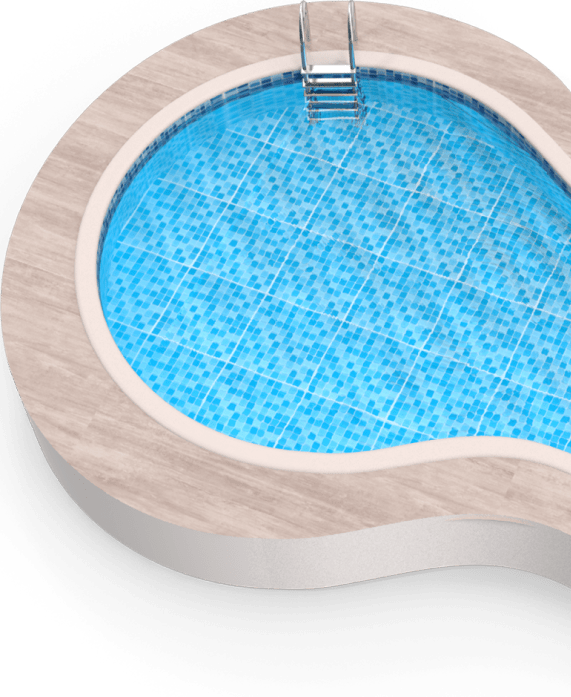
- The Kidney: The mid-century natural feeling with a cut out, which is ideal to place a shrub or a small patio table.
- The Figure-8: Clearly separates the shallow and deep ends, making it a favorite for families with younger swimmers.
- The Roman: Similar to a rectangle but with rounded “arched” ends, giving it an old-world, Mediterranean feel.
- The Grecian: Another formal variation with “cut” corners that create an octagon-like appearance.
- The Oval: A softer alternative to the rectangle that still offers a long swim path but feels less “boxy.”
- The Freeform: A catch-all for any shape that doesn’t follow a set pattern, allowing for total creative freedom.
Specialized and Custom Designs
Sometimes, the standard menu doesn’t cut it. Specialized and Custom Designs are for the yards that have unique challenges or for homeowners who want a true one-of-a-kind statement piece. Maybe you want a “Plunge Pool” for a tiny urban courtyard, or perhaps a “Spool” (a hybrid spa-pool) that fits into a tight corner. Custom shapes allow you to work around massive oak trees or steep slopes, ensuring that the different shapes of inground pools you consider actually work with your land rather than fighting against it.
How to Choose an Inground Swimming Pool: Shape and Colour
It isn’t just about the outline; the color of your pool finish completely changes how that shape is perceived. A sharp, geometric pool looks striking with a dark charcoal or navy finish, creating a mirror-like reflection. An organic, freeform pool often looks better with sand-colored or light teal finishes to mimic a tropical beach. When asking yourself, “Which Pool Shape Is Right for You?“, think about the sightlines from inside your house. Do you want to see a crisp, architectural line or a soft, watery curve?
FAQs:
What is the best shape for an inground pool?
If you want to swim laps and use an automatic cover, a rectangle is better. If you want a relaxed, social atmosphere with varied seating areas, a freeform or kidney shape is a good choice.
What are the different types of inground pools?
Aside from the shape, pools are categorized by material: Concrete (Gunite), Vinyl Liner, and Fiberglass. Each material has different limitations when it comes to the different types of inground pool shapes you can achieve.
What shape inground pool is the cheapest?
The standard rectangular pools are the most cost-effective to build, especially in vinyl or fiberglass, because the excavation and manufacturing processes are more predictable.
What is the most popular inground pool?
The classic Rectangle remains the most popular choice globally because of its timeless look, ease of maintenance, and the fact that it fits almost any backyard style.
Ready to bring your dream backyard to life? Contact our team today to explore custom shapes that turn your pool into a personal masterpiece.


Comments are closed