
You spot a crack in your pool shell and your stomach drops. For most homeowners, the first question is: is this a pool crack repair I can patch, or do I need to replaster the whole thing? That question has a real answer and getting it wrong either costs you thousands in unnecessary work or leaves a structural problem to grow.
The crack type, its location, and how it behaves over time all determine the right fix. After 15+ years repairing pools across Miami and South Florida, we’ve seen every variation. Here’s how we think about it.
Why Pool Cracks Happen in South Florida
South Florida’s soil is the root cause of most pool cracking. We sit on sand and limestone both shift with moisture changes and hydrostatic pressure. When the ground moves, your pool shell moves with it. Add the heat that accelerates chemical wear on plaster, and cracking is almost inevitable over time.
That said, not all cracks come from the ground. Some are a product of age, some from improper construction, and others from chemistry imbalances that dry out and weaken the plaster surface.
The Four Most Common Causes We See
- Soil movement and settlement: especially in homes near water tables or low-lying areas common in Miami-Dade and Broward counties.
- Hydrostatic pressure: when groundwater builds under the shell and the pool is drained without pressure relief, the shell can crack or pop.
Regular inspections and pool equipment repair Miami can help prevent these common issues from escalating.
- Surface wear: plaster naturally erodes after 10–15 years. When it gets thin, hairline cracks form at the surface layer.
- Improper water chemistry: low calcium hardness and high acidity eat plaster. We see this a lot in pools that skip regular chemical service.
To prevent issues like cracks, surface wear, and chemical damage, regular pool maintenance service Miami is essential for long-term pool health
Two Types of Cracks and Why the Difference Matters
Every pool crack repair decision starts with identifying whether the crack is structural or cosmetic. This is not a gray area. The distinction drives everything.
Structural Cracks
A structural crack goes through the entire shell through the plaster, through the gunite or concrete. You’ll typically notice these because they’re wider (1/8 inch or more), they may shift or grow, and the pool often loses water at a rate that doesn’t match normal evaporation.
Warning Sign: If your pool drops more than ¼ inch of water per day without wind or heavy splash-out, suspect a crack is causing a leak. Run a bucket test to confirm.
Structural cracks require epoxy injection or hydraulic cement filling, followed by a professional assessment of whether the underlying cause, usually soil or pressure, has been addressed. If it hasn’t, the crack comes back.
Cosmetic (Crazing) Cracks
These are surface-only fractures typically spider-web patterns called crazing or fine hairline lines that sit in the plaster but don’t penetrate the shell. No water loss, no movement. They look alarming, but they’re a plaster problem, not a structural one.
The fix here depends entirely on how much of the surface is affected. A small patch of crazing can be spot-repaired. When it’s widespread, covering 25–30% or more of the surface, patching becomes cosmetic patchwork that won’t hold up. That’s when replastering makes more sense.
Pool Crack Repair: When Patching Is the Right Call
Patching works well in specific, defined situations. Recommending it when conditions don’t support it is something we avoid a bad patch wastes your money and delays the real solution.
Good Candidates for Patching
- Isolated structural cracks that are stable (not actively moving), properly injected, and fully sealed.
- Small surface crazing covering less than 15–20% of the pool surface, where the surrounding plaster is still solid and bonded.
- Spot repairs around fittings such as around lights, return jets, or skimmers areas that cracked due to hardware stress rather than systemic surface failure.
- Pools under 8 years old where the plaster still has years of life remaining and only a specific area is affected.
When we patch, we use hydraulic cement or pool-grade epoxy for structural cracks, and white marble plaster or quartz blend for surface repairs. We also treat the repair area with a bonding agent to minimize color variance though some contrast is expected with older plaster.
Honest reality: Patched areas almost always look different from the surrounding plaster. The older your surface, the more visible the repair. That’s not a workmanship issue it’s physics. If appearance matters, replastering gives you a uniform finish.
When Replastering Is the Better Investment
Replastering a pool is a $4,000–$12,000 job in South Florida depending on size, surface material, and prep required. It’s not a decision to make lightly but in the right circumstances, it’s the far more cost-effective choice over repeated patching.
Signs You Need to Replaster, Not Patch
- Multiple cracks in different areas of the pool signal widespread plaster failure, not isolated stress.
- Rough, etched, or hollow-sounding plaster tap the surface; if it sounds hollow, the plaster has delaminated from the shell.
- Staining that penetrates the plaster and can’t be removed with acid washing.
- Plaster under 3/8″ thick at that point there’s not enough material left to bond a patch reliably.
- Pool is 15–20+ years old and has never been replastered most plaster has a 10–15 year lifespan in Florida’s climate.
What Replastering Actually Involves
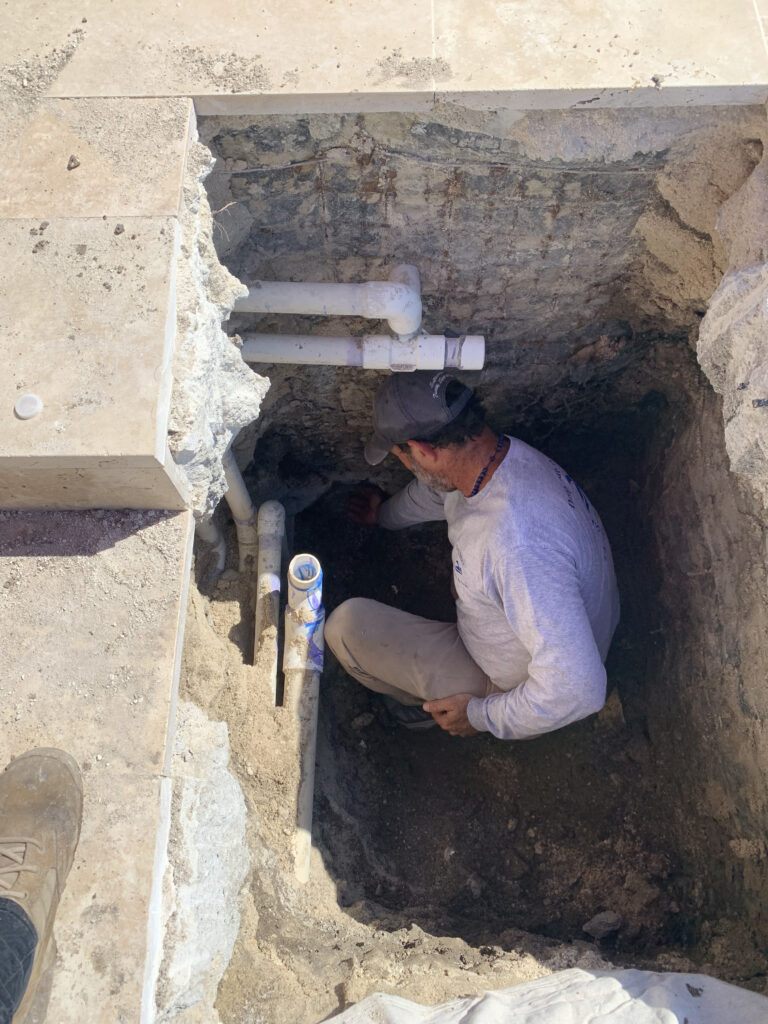
We drain the pool, chip out the old plaster down to the shell, prep the surface, apply a bond coat, then apply the new plaster finish. The process takes 4–7 days including cure time before the pool is refilled and chemistry is balanced.
You can choose from white plaster (most affordable), quartz aggregate (more durable, mid-range), or pebble/glass bead finishes (premium durability and appearance). For homes in coastal Miami-Dade, we often recommend quartz or pebble they hold up better against the chemistry demands of saltwater systems, which are increasingly common here.
Good to know: After replastering, your pool should look new and feel smoother underfoot. But chemistry management in the first 28 days is critical improper startup can stain or etch fresh plaster before it’s fully cured.
The Decision Framework We Use With Homeowners
When a homeowner calls us about a crack, we always do a physical inspection before making a recommendation. But the framework below covers most situations:
| Situation | Recommended Fix | Why |
| 1–2 isolated cracks, pool under 10 yrs | Patch + monitor | Cost-effective if plaster is otherwise sound |
| Stable hairline surface crazing, < 20% area | Spot patch | Surface-only issue, plaster still has life |
| Water loss confirmed, crack leaking | Structural repair + leak test | Leak source must be sealed before any cosmetic work |
| Widespread crazing, rough texture, age 15+ | Full replaster | Patching will fail; replaster resets the clock |
| Multiple cracks + hollow plaster sounds | Full replaster + structural review | Delamination means the whole surface has failed |
| Recent construction crack (< 3 yrs old) | Builder warranty review + structural repair | May indicate construction defect — document thoroughly |
Common Questions on Pool Crack Repair
Can I patch a pool crack myself?
Underwater epoxy kits are sold at hardware stores, and for very small, stable surface cracks they can work as a temporary measure. But for anything that involves active water loss or cracks wider than 1/16 inch, DIY repair typically fails within a season. The prep work grinding the crack, cleaning it, controlling moisture, is where most DIY attempts fall short.
How long does a patch last?
A properly done professional patch on a stable crack can last 5–8 years. If the crack was caused by ongoing soil movement or chemistry damage that hasn’t been corrected, expect it to reopen within 2–3 years regardless of the repair quality.
Does homeowner’s insurance cover pool cracks?
Most standard homeowner’s policies exclude pool shell damage caused by wear, age, or soil movement. Some policies cover sudden and accidental damage. We always advise homeowners to call their insurer before starting work document the crack with photos before any repair is done.
Will the patch color match?
It’s unlikely to be a perfect match unless the pool is replastered shortly after. Plaster colors shift and fade over time. We use color-matched material and feather the edges, but on older plaster, some contrast is normal. The goal is a solid, watertight repair cosmetic perfection on a 12-year-old surface isn’t a realistic promise from any contractor.
Pool crack repair is not a one-size decision. The crack type, the age and condition of your plaster, and what caused the crack all factor into the right answer. Patching saves money when conditions support it. Replastering is the better investment when the surface has reached the end of its serviceable life.
If you’re seeing cracks in your pool and you’re not sure what you’re dealing with, the worst move is waiting. Small structural cracks let water into the shell and cause damage that’s far more expensive to fix later. Contact Deep Blue Pool & Spa for a free crack assessment we’ll tell you exactly what you need, and we won’t sell you a replaster when a patch will do the job.
Ready to Stop Guessing About Your Pool Crack?
Call Deep Blue Pool & Spa for a free on-site crack assessment. Miami & South Florida. Same-day appointments available.


Comments are closed