

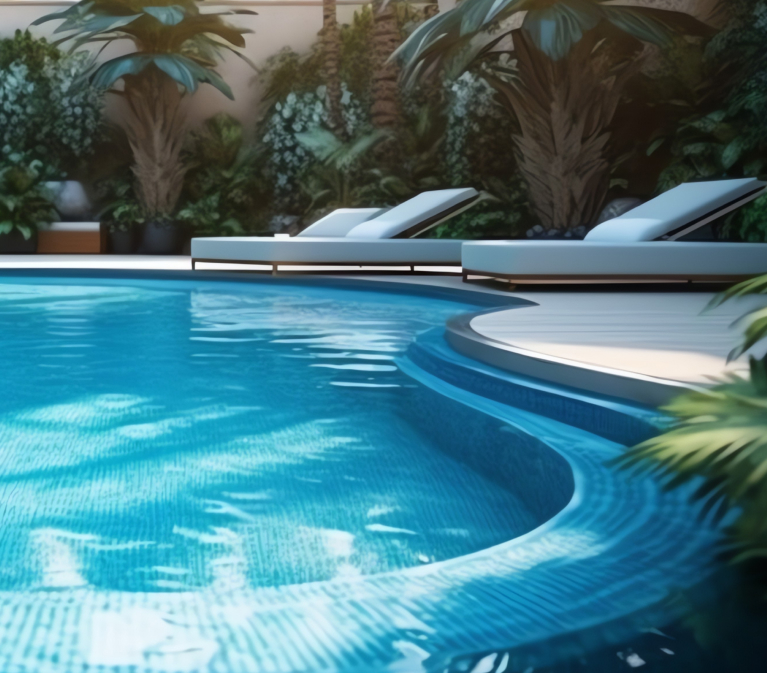
Most people build the wrong pool.
They build the pool they think they want based on a photo they saw, rather than the pool their actual life can handle. They build a massive lap pool when they hate cardio. They build a deep diving pool when they just want to stand around with a margarita.
If you are going to tear up your yard, annoy your neighbors for three months, and spend a small fortune, you need to get this right.
This guide isn’t about “optimizing your outdoor oasis.” It’s about looking at the different types of swimming pools and figuring out which one you won’t regret three years from now when the novelty wears off and you’re just the guy skimming leaves on a Saturday morning.
By Construction
(Understanding what your pool is made of)
Before choosing a pool’s shape or appearance, it is important to understand how it is constructed. The material used determines not only how the pool looks and feels, but also how long construction will take and how much maintenance it will require in the future.
Concrete (Gunite) Pools
Concrete pools are built entirely on-site. It is done by excavation of the pool area, a structure of steel reinforcement, and spraying of concrete under high pressure. The building process can require a matter of weeks, which is likely to make the backyard dusty and noisy.
- Advantages: Concrete pools offer complete design freedom. Almost any shape, depth, or feature can be created. They are strong, durable, and give a permanent, high-end feel.
- Disadvantages: Concrete surfaces are porous, which means algae can grow more easily. This leads to higher chemical use and more frequent cleaning. Standard finishes may feel rough on the feet unless upgraded.
- Best suited for: Homeowners who want full control over design and are comfortable with higher maintenance.
Fiberglass Pools
Fiberglass pools are manufactured in a factory as a single unit and delivered to the home. Once the ground is prepared, the pool is placed into position using a crane.
Advantages:
Installation is fast, often completed in a few weeks. The surface is smooth, non-porous, and resistant to algae, making maintenance easier. It is comfortable to walk on and requires fewer chemicals.
Disadvantages:
Design options are limited to pre-made models. Size is also restricted, as the pool must be transported by road.
Best suited for:
Those who want a quick installation and low-maintenance pool without extensive customization.
Vinyl Liner Pools
These pools use a frame made of steel or polymer panels, lined with a durable vinyl sheet that holds the water.
Advantages:
Vinyl pools are generally more affordable and allow for some customization in shape. The liner surface is soft and comfortable underfoot.
Disadvantages:
The vinyl liner can be damaged by sharp objects and will need replacement every 7 to 10 years, which adds to long-term costs.
Best suited for:
Buyers looking for a cost-effective option with reasonable design flexibility.
Part 2: Design and Use
(How the pool will actually be used)
Choosing the right pool design depends on lifestyle. It is helpful to think about how the pool will be used on a regular basis, rather than focusing only on appearance.
Lap Pools
Lap pools are long and narrow, designed primarily for swimming exercise.
Key consideration:
They are not ideal for socializing or recreational activities.
Best suited for:
Individuals who plan to use the pool mainly for fitness.
Spools (Spa + Pool)
A spool is a small pool that combines features of a spa and a swimming pool.
Key consideration:
They are easy to heat, can be used year-round, and focus on seating and relaxation rather than swimming.
Best suited for:
Homeowners who want a relaxing water space and have limited outdoor area.
Infinity (Vanishing Edge) Pools
These pools create the visual effect of water flowing into the surrounding landscape.
Key consideration:
The design works best when there is a scenic view. They require additional engineering, pumps, and ongoing energy costs.
Best suited for:
Properties with views that enhance the visual effect.
Plunge Pools
Plunge pools are shallow and deep with the purpose to cool down, rather than swim.
Key consideration:
They do not need much water or maintenance as compared to large pools.
Best suited for:
Homeowners who have low space and minimalist designs.
Cocktail Pools
Cocktail pools are small pools that have seating provisions that are built in.
Key consideration:
They are meant to be used in socialization and not physical activities.
Best suited for:
Individuals that love entertaining guests.
Natural Swimming Pools
Natural swimming pools do not rely on chemical filtration, but plants and biological filtration.
Key consideration:
The water is clean but natural looking like a pond.
Best suited for:
Eco-friendly homeowners that are at home with a natural design.
Zero-Entry (Beach Entry) Pools
Such pools have a lineal slope, rather than steps.
Key consideration:
They increase the accessibility but need to provide additional space to get deeper water.
Best suited for:
Families having children, elderly ones or spacious yards.
Part 3: Pool Shapes and Maintenance
(How shape affects cleaning)
Pool shape plays a major role in how easy the pool is to maintain.
- Rectangular pools are the easiest to clean and work well with automatic covers and cleaning systems.
- Freeform pools look natural but may collect debris in curved areas, requiring more manual cleaning.
- L-shaped pools allow separate zones for different activities but need careful planning to ensure proper water circulation.
FAQs
Which type of swimming pool is the best?
There is no single “best” swimming pool for everyone. The best option will be determined by money and space, the purpose of use and the desire to keep the pool. Concrete pools have the greatest ability to be designed, fiberglass pools have the added benefit of being able to install quicker and have less maintenance, and vinyl liner pools tend to be cheaper. The most appropriate one is the pool which suits your life and your needs in the long term.
What type of pool is easiest to maintain?
Fiberglass pools are normally the least demanding to maintain. Their smooth, non porous surface does not allow any growth of algae and their usage needs minimum chemicals and less frequent cleaning in comparison to the concrete or vinyl liner pools.
How much maintenance does a swimming pool require?
All swimming pools require regular maintenance, including water testing, cleaning, and equipment checks. The effort applied is dependent on the type of pool. Other consumers handle household repairs personally, whereas other people employ professional services. To maintain the pool in good conditions throughout the year, it is necessary to plan on future maintenance in terms of time and money.
How do I choose the right swimming pool for my home?
The selection of the right pool is done keeping in mind how frequently it is supposed to be used, who is going to use it, the space it will occupy, and the maintenance expectations in the long run. One should also have the ability to reason ahead and come up with a pool that would be functional even as the needs of the household evolve with time.
Final Thought
The most attractive pool is not necessarily the most beautiful, it is the pool that suits your lifestyle, level of maintenance comfort, and future anticipations. The consideration of the planning at the beginning assists in the realization of satisfaction in the future years.


Comments are closed