
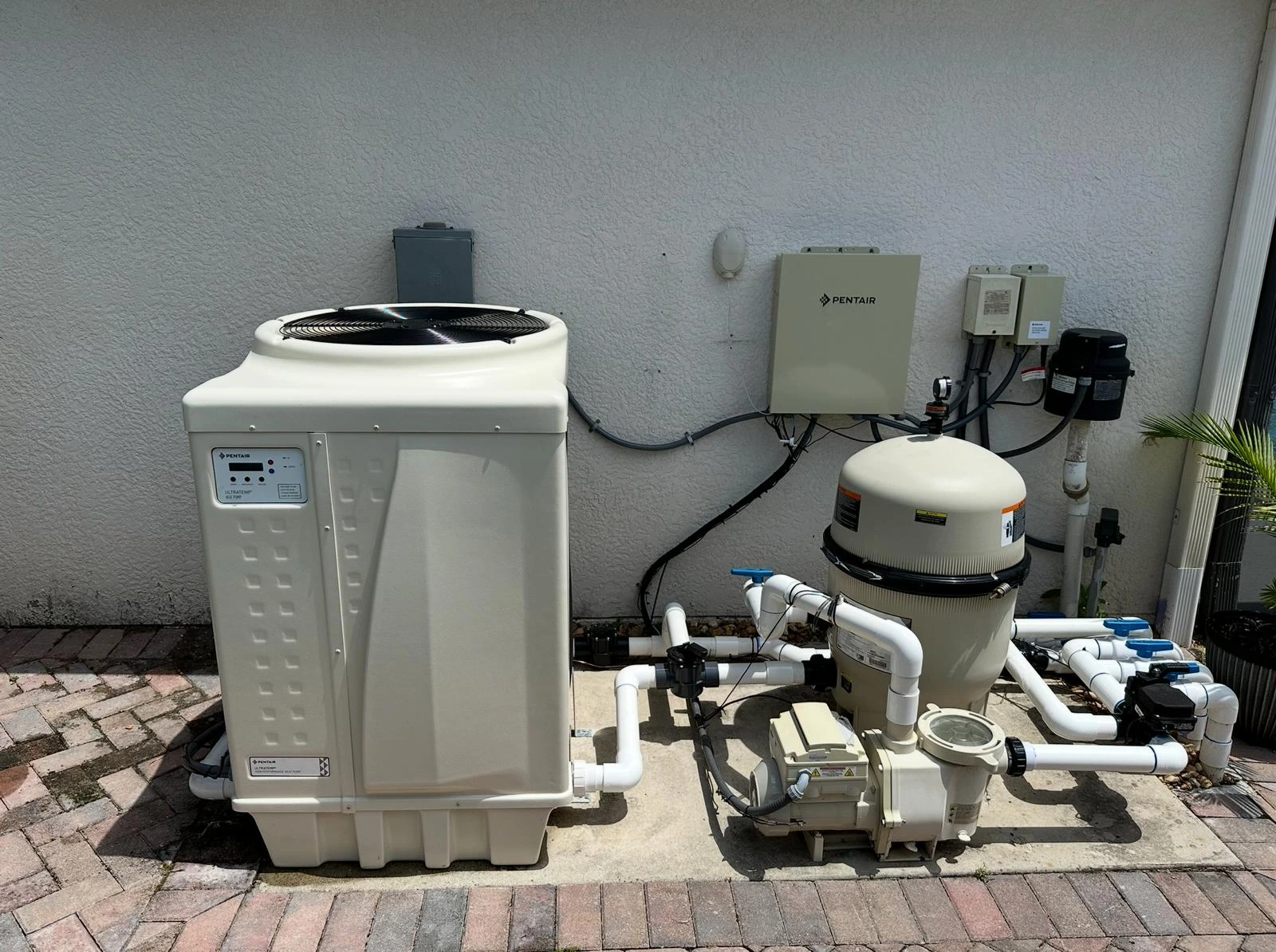
Replacing a pool heater typically costs $1,800–$8,500, depending on the heater type, pool size, and installation complexity. Most homeowners pay between $3,000 and $5,000 for the unit and professional installation combined. Gas heaters are the fastest and often the cheapest to install, heat pumps are the most efficient in warm climates like Florida, and solar systems cost the most upfront but save the most over time. This guide breaks down every cost factor so you know exactly what to budget before calling a contractor.
Repair vs. Replace: When Does It Make Financial Sense?
A simple rule of thumb: if the repair cost is more than 50% of the price of a new heater and your unit is more than 7 years old, replacing it is usually the smarter move. A newer unit is more efficient, comes with a fresh warranty, and avoids the cycle of repeat repairs. For a broader look at the decision, see pool repair vs. renovation and how much pool repair costs in Florida.
| Situation | Typical Repair Cost | Best Move |
| Heater under 7 years old, minor issue (igniter, thermostat, pressure switch) | $150–$600 | Repair |
| Heater 7–10 years old, repair is under 50% of replacement cost | $400–$1,200 | Repair, but start budgeting |
| Heater over 7 years old; repair is over 50% of replacement cost | $1,500+ | Replace |
| Cracked heat exchanger or corroded burner assembly | $1,500–$3,000+ | Replace |
Average Pool Heater Replacement Cost
The average pool heater replacement costs between $3,000 and $5,000, installed. That is a wide range, and the extremes are wider still. A simple like-for-like swap can come in around $1,800, while a large heat pump or solar system with infrastructure upgrades can reach $8,500 or more.
The final price depends on three main things: the type of heater, the size of your pool, and how complex the installation is. If you want a number specific to your pool, contact us, and we will give you a clear estimate based on your pool size and equipment setup.
Pool Heater Replacement Cost by Type
The type of heater is the biggest factor in your total cost. Each type has a very different price tag and operating profile. For a Miami-specific comparison, read our guide to pool heater vs. heat pump vs. solar in Miami.
| Heater Type | Unit Cost | Installed Cost |
| Gas and propane | $1,500–$4,000 | $1,500–$6,000+ |
| Electric heat pump | $1,000–$6,000+ | $2,500–$8,500 |
| Solar | $1,500–$7,500+ | $2,500–$9,500 |
| Electric resistance | $500–$5,000 | $1,200–$6,000 |
Gas and Propane Heaters
Gas heaters heat water very fast, which makes them ideal for occasional use, spas, or year-round use in cooler climates. Popular models from brands like Hayward and Raypak generally run about $2,000–$3,500 for the hardware alone. The trade-off is higher monthly operating costs.
Electric Heat Pumps
Heat pumps are very energy-efficient in warm climates like Florida and cost much less to run each month. They pull warmth from the surrounding air, so they heat more slowly and lose effectiveness when temperatures drop below about 50°F. They also need a heavy-duty 240V electrical circuit, which can add to installation cost.
Solar Heaters
Solar heaters have a high upfront cost because of the panels and roof or ground mounting labor, but their operating cost is near zero. They deliver the best long-term return in sunny states like Florida, California, and Arizona.
Electric Resistance Heaters
Electric resistance heaters are best suited to small above-ground pools and spas. They are inexpensive to buy but costly to run on larger pools.
Factors That Affect Pool Heater Replacement Cost
Here is what actually drives the price up or down.
Pool Size
A small pool of 10,000–15,000 gallons can use a smaller, cheaper unit. A 30,000-gallon pool, or a pool and spa combination, needs a heater with much more capacity, and that pushes the price up.
Installation Complexity
Some installations are straightforward: the old heater comes out, the new one goes in, and you are done. Others are more involved. Your current setup may no longer meet code, the gas lines may need work, or the electrical panel may need an upgrade. All of that adds to the pool heater installation cost.
Switching from one heater type to another, such as gas to electric, usually means more work and higher labor costs.
Location and Labor Rates
Labor rates vary by region, and even between cities in the same state. In some areas,s installation runs about $75 an hour, while in others it is $150 or more. That difference can add several hundred dollars to your total. Equipment that is hard to access, or a remote property, can also raise the price.
Existing Infrastructure
If your gas lines, electrical service, and plumbing connections are in good shape, installation is smoother and cheaper. If you need new wiring, replacement of corroded pipes, or updated gas connections, those repairs add up quickly. Sometimes the infrastructure work costs nearly as much as the heater itself.
Pool Heater Replacement Cost Breakdown
Here is where your money typically goes:
- Equipment: $1,000–$6,000 depending on heater type. More efficient and higher-end models cost more.
- Labor: $400–$1,500 for professional installation, depending on how long the job takes and how complex it is. A simple swap sits at the low end; major modifications sit at the high end.
- Permits and inspections: Many areas require a permit for a pool heater installation. Expect roughly $50–$200, and check your local requirements, including our guide to pool permits in Miami-Dade.
- Infrastructure upgrades: Switching fuel types, running new gas lines, upgrading an electrical sub-panel, or pouring a new hurricane-rated equipment pad can add $1,000–$3,000.
- Removal and disposal of the old heater: About $25–$100, and some contractors include this in the quote.
Add it up and most homeowners land between $3,000 and $5,000 for a complete replacement.
Additional Cost Considerations
A few other things can affect your final bill:
- Upgrading for efficiency: If you are replacing an older heater, a more efficient model costs more upfront but lowers your monthly energy bill. It is worth running the numbers, and our guide to pool energy-efficiency upgrades shows where else you can save.
- Warranty and maintenance plans: Extended warranties and annual maintenance packages are not free, but they can save you money if something goes wrong.
- Seasonal demand: Replacing a heater right before summer, when everyone wants a warm pool, can cost more. Off-season installations can sometimes get you a better deal.
How Long Does a Pool Heater Last Before Replacement?
Average lifespans vary by type, and regular pool maintenance can extend equipment life:
| Heater Type | Average Lifespan |
| Gas | 8–12 years |
| Heat pump | 10–15 years |
| Solar | 15–20 years |
Signs it is time to replace rather than repair:
- The heater is past its typical lifespan and breaking down repeatedly.
- The repair quote is more than 50% of the cost of a new unit.
- The heat exchanger is cracked or corroded.
- Water takes much longer to heat than it used to, or never reaches the set temperature.
- Your energy bills keep climbing for the same amount of heating.
- You see rust, leaks, or scale buildup around the unit.
- Replacement parts are no longer available for your model.
How to Save on Pool Heater Replacement Cost
Nobody wants to overpay. These tips help you keep costs down without cutting corners:
- Get multiple quotes. Get at least three estimates and compare exactly what each one includes (our tips for choosing the right pool contractor can help). The cheapest quote is not always the best, but comparing will show you what is fair.
- Consider energy efficiency. A more efficient heater costs more now but saves money every month. Spending an extra $500 upfront can save $200 a year in energy costs.
- Look for rebates. Some utility companies and local programs offer rebates on energy-efficient pool equipment, which can return a few hundred dollars.
- Time it right. If you can wait for the off-season, contractors are less busy, and you may be able to negotiate a better rate.
- Stick with the same type. Replacing your heater with the same type keeps installation simpler and cheaper. Switching types adds complexity and cost.
DB Pool & Spa can help you figure out where to save without sacrificing quality. Our team has worked on enough pools to know what really matters.
DIY vs. Professional Pool Heater Replacement
Can you do it yourself and save money? In most cases, no.
DIY pool heater installation is not recommended. Gas heaters involve pressurized fuel lines, and mistakes create serious safety hazards. Heat pumps require certified electrical work. Most manufacturers void the warranty on non-professional installs. In most U.S. states, gas appliance installation also legally requires a licensed contractor.
Hiring a licensed pool technician typically costs $400–$1,500 and ensures code compliance, proper sizing, and a valid warranty. Permits and inspections are also normally signed off by a licensed professional, so if you do the work yourself and something goes wrong later, you may not be covered by insurance.
Bottom line: this is not the project to learn on. Paying a professional may feel expensive, but it is worth it for the safe installation, code compliance, and warranty.
FAQs
How much does it cost to replace a pool heater?
Replacing a pool heater typically costs $1,800–$8,500 total, with most homeowners paying $3,000–$5,000. Gas heaters are generally the least expensive to install, while solar systems cost the most upfront but have the lowest operating costs.
How long does pool heater installation take?
A like-for-like replacement typically takes 2–4 hours. If you are switching heater types or need new gas lines, electrical upgrades, or permits, installation can take 1–2 days. Always confirm the timeline with your contractor before scheduling.
What is the best type of heater for a swimming pool?
It depends on your priorities. Gas heaters are great if you want fast heating and do not mind higher operating costs. Heat pumps are the best middle-ground option: efficient, reliable, and a good fit for warm climates like South Florida. Solar heaters are ideal if you live somewhere sunny and want the lowest long-term cost.
Is it worth repairing or replacing a pool heater?
If the repair cost exceeds 50% of a new unit’s price and your heater is more than 7–10 years old, replacement is usually the smarter investment. Newer units are significantly more energy-efficient, which lowers long-term operating costs. See our breakdown of what it costs to maintain a pool.
What type of pool heater is cheapest to run?
Heat pump pool heaters are the cheapest to run in most climates, at roughly $50–$150 per month compared with $200–$400 per month for gas. Solar heaters have near-zero operating costs but depend on sunlight and work best in warm, sunny regions.
Ready to Replace Your Pool Heater?
Planning a full backyard upgrade? Use our Pool Cost Calculator to estimate your total pool project pricing in Miami and surrounding areas, or read our guide on how much it costs to build a pool.
If you are thinking about installing or replacing your heater, the team at DB Pool & Spa is here to help. We keep things simple, clear, and smooth from start to finish. Contact us or give us a call, and we will take care of the rest.


Comments are closed