
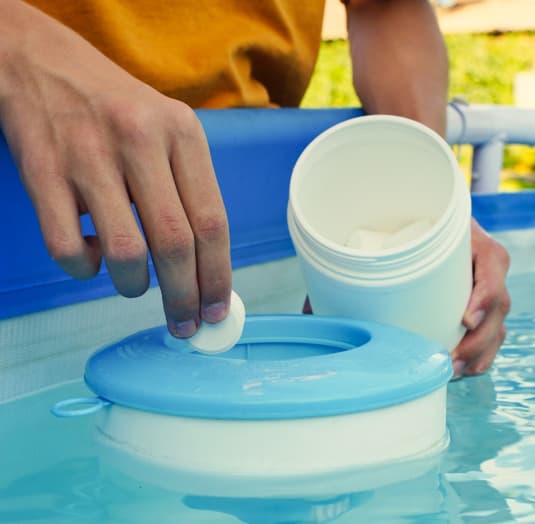
When your pool suddenly turns cloudy or looks like it has a strange fog inside it, a pool flocculant can literally save the day. It works fast, sometimes weirdly fast, and gives you that crystal-clear blue water again. But a lot of people don’t know what flocculant actually does or when you should even use it. So let’s break it down in a simple way (with some slightly awkward sentences here and there).
What Is Pool Flocculant?
A pool flocculant or just “floc” is a chemical that clumps together tiny dirt, algae, debris, and other floating particles in your pool. These particles are usually too small for your pool filter to catch. That’s why the water stays cloudy even when the pump is running perfectly fine.
Flocculant pulls all those teeny-tiny bits together into big, heavy clumps (called flocs) that sink to the bottom of your pool.
It basically gathers the mess and drops it like a stone.
What Does Flocculant Do in a Swimming Pool?
Here’s what flocculant in swimming pools actually does:
- Collects tiny particles that cause cloudiness
- Forces them to sink to the bottom
- Makes vacuuming easier
- Clears up water fast, usually overnight
- Helps your pool go from green to blue, although it’s not a magic potion
Pool Flocculant vs Clarifier: What’s the Difference?
People always ask: should I use flocculant or clarifier? They sound similar, but they work very differently.
Pool clarifier is the easier option. It’s a milder chemical that takes several days to completely clear up a cloudy pool. You pour it in, and your filter does all the work. The particles clump together but stay small enough to get caught in your filter. No extra vacuuming. No wasted water. Just wait 2-3 days and your pool clears up.
Pool flocculant is the fast option. It works in 1 or 2 days and is very effective at keeping particles clumped together. But it requires manual labor. You have to vacuum the clumps yourself, and you lose water in the process.
Use clarifier when:
- Your pool is only slightly cloudy
- You’re not in a hurry
- You want a hands-off solution
- You have a cartridge filter
Use flocculant when:
- Your pool is super cloudy or green
- You need it clean in 24-48 hours
- You have a sand or DE filter
- You’re willing to do the work
One more important thing: flocculants shouldn’t be used with cartridge filters, while clarifiers are safe for all filter types. If you have a cartridge filter, stick with clarifier unless you have custom plumbing that lets you bypass your filter.
How to Use Flocculant in a Pool (Step-by-Step)
Using flocculant in a pool is pretty easy, but the process must be followed correctly; otherwise, you’ll end up with more cloudiness, not less.
1. Check and Balance Your Pool Chemistry
Before adding flocculant to the pool:
- Adjust the pH to 7.2–7.6
- Make sure chlorine levels are normal
- Ensure the pump and circulation system are working
If your pump is broken or weak, fix that first, because floc works only if your pool can circulate the water properly in the beginning.
2. Add the Pool Flocculant
Read the instructions on your product (different brands vary a bit). Usually:
- Turn your multiport valve to “Recirculate.”
- Pour the recommended amount of flocculant into the water.
- Let it circulate for 1–2 hours, so it spreads around.
It may feel too simple but that’s it.
3. Let the Flocculant Settle Overnight
After the pump has run for 2 hours, turn it off. Completely off. The water needs to be as still as possible for about 8 hours so that it has time to collect the waste.
Most people do this overnight. Add the flocculant in the evening, let it run for 2 hours, then shut everything down before bed. By morning, all the gunk will be sitting at the bottom of your pool.
After letting the pool floc work in stillness for 8 hours, you’ll notice a layer of sediment at the bottom of the pool. It usually looks like a giant ring formation around the bottom.
4. Vacuum to Waste
This part is slightly annoying but important.
- Set your filter to “Waste.”
- Slowly vacuum the floor of the pool.
- Don’t stir the settled debris, or it’ll float back up.
You will lose some water while vacuuming, which is normal.
5. Handle Cloudiness During Vacuuming
Sometimes the water gets cloudy again while you’re vacuuming. Don’t panic. This is normal, especially if you’re moving too fast or if the particles didn’t fully settle.
If this happens, stop vacuuming. Turn everything off and let the pool sit for another 12-24 hours. The particles will settle again, and you can finish vacuuming.
You might need to vacuum multiple times. Vacuum again after a few days, even several times if needed, to clear up the debris that has hopefully settled by now.
6. Refill and Clean the Filter
After vacuuming:
- Refill your pool to the normal water level
- Backwash or clean your filter
Sometimes you may need to run the pump for a few hours just to polish the water.
When Should You Use Flocculant in Swimming Pools
Use a flocculant only when:
- The water is very cloudy
- Your pool is light green but not swamp-green
- You need fast results, like before a party
- You have debris too fine for the filter to catch
Don’t use floc weekly or casually; it’s a “special situation” chemical. A once-in-a-while hero.
FAQ’s
1. When to add flocculant to a pool?
When the pool is extremely cloudy or slightly green, and your filter can’t clear it. Add it after balancing your pool chemistry.
2. What are the disadvantages of flocculant?
- You lose a lot of water (vacuuming to waste).
- Takes more effort than a clarifier.
- Not suitable for cartridge filters unless you’re ready for extra steps.
- Can cause more cloudiness if used incorrectly.
3. Can you swim after putting flocculant in the pool?
Nope. Absolutely not. You must wait until everything settles, the pool is vacuumed, refilled, and the chemistry is normal again.
4. Will flocculant clear a green pool?
Yes… but only a light green pool. If your swimming pool water is dark green, swampy, or smelly, shock it first before using flocculant. Floc helps with cloudiness, not heavy algae.
Final Thoughts
A pool flocculant is like a super-fast deep cleaner for your pool water. It’s not something you’ll use every week, but when your water looks cloudy, dull, or slightly green, flocculant works like magic, if you follow the steps properly. Just remember to balance chemicals, let it settle overnight, vacuum to waste, and clean your filter after. And your pool will look like it just came out of a renovation.


Comments are closed